Skip to content Skip to footer

Diving at Andros Beach Club

Diving

Bahamas Adventure

Bahamas Diving

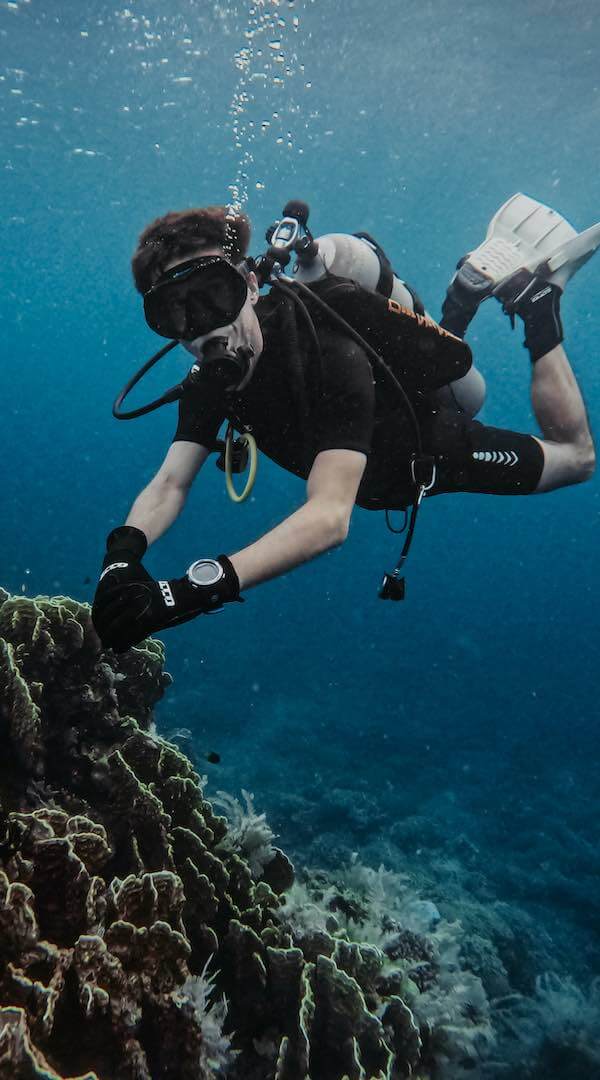
Andros Diving is located onsite at the Andros Beach Club Resort. We offer daily and weekly dive trips that explore the very best of the Bahamas, including the Andros Barrier Reef, the Blue Holes, and the Tongue of the Ocean. Experience spectacular reef diving, wall diving, blue hole diving, wreck diving, and more. Don’t miss our Bahamas All-Inclusive Dive Trips!
How RealMoneyCasinos Explains Real Money Gambling Regulations in Australia

Australia occupies a genuinely unusual position in the global gambling landscape. It is a country where gambling participation rates are among the highest in the world — Australians lose more money per capita on gambling than citizens of almost any other nation — yet the regulatory environment governing how, where, and with whom they can legally gamble is layered, fragmented, and frequently misunderstood by the very people it affects. The Interactive Gambling Act 2001, the primary federal legislation governing online gambling, has been amended multiple times since its introduction, most significantly in 2017, and yet many Australian players still operate under outdated assumptions about what is and is not permitted. Understanding the regulatory framework is not merely an academic exercise; it has direct consequences for where players can safely deposit funds, what protections apply to them when disputes arise, and whether the operator they are dealing with is accountable to any licensing authority at all.

The Structure of Australian Gambling Law and Why It Creates Confusion

Australia operates under a federated system of government, which means gambling regulation is divided between federal and state or territory jurisdictions. The federal government, through the Interactive Gambling Act 2001 (IGA), controls the provision of interactive gambling services — broadly meaning online gambling — while individual states and territories retain authority over land-based gambling, including pokies, casinos, and racing. This division creates a situation where a player in New South Wales might be subject to different rules depending on whether they are placing a bet at a physical venue, through a state-licensed telephone betting service, or via an offshore website accessed from their home.

The 2017 amendments to the IGA were the most consequential changes to Australian online gambling law in over a decade. These amendments introduced a formal prohibition on offshore online casino services — meaning online casino games such as slots, roulette, blackjack, and poker offered by operators not licensed in Australia — and established the Australian Communications and Media Authority (ACMA) as the enforcement body with powers to direct internet service providers to block access to non-compliant offshore sites. Prior to 2017, the IGA already prohibited Australian companies from offering these services to Australian residents, but the legislation had a significant gap: it did not clearly prohibit offshore operators from offering services to Australians, only from being based in Australia to do so. The 2017 amendments closed that gap, at least in principle.

In practice, enforcement has been complicated. The ACMA maintains a list of sites that have been directed to be blocked, and by mid-2024 that list had grown to include hundreds of domains. However, the use of virtual private networks (VPNs) remains widespread among Australian players, and offshore operators continue to accept Australian players despite the prohibition. The law creates a situation where the supply of illegal services remains accessible while the demand — the players themselves — faces no criminal penalty for using those services. The IGA specifically targets operators, not individual players, which means an Australian resident who deposits at an unlicensed offshore casino is not committing a criminal offence, even though the operator is technically providing an illegal service to them.

Sports betting operates under a different framework. Online sports betting is legal in Australia when provided by an operator holding a licence from an Australian state or territory. Major operators like Sportsbet, TAB, and Ladbrokes Australia hold licences — typically from the Northern Territory, which has become the dominant licensing jurisdiction for interactive wagering operators due to its relatively streamlined regulatory process. These operators can legally accept bets on sporting events, racing, and other contingencies from Australian residents. What they cannot legally offer is casino-style gaming: the spinning reels, the virtual card tables, the live dealer streams that dominate the revenue of offshore operators targeting Australian players.

How RealMoneyCasinos Approaches Regulatory Transparency for Australian Players

One of the persistent challenges for Australian players navigating this environment is finding accurate, current information about which operators hold legitimate licences, what those licences actually cover, and what recourse exists when something goes wrong. Many review and information websites in the gambling space present licensing information superficially — listing a licence number without explaining what jurisdiction issued it, what that jurisdiction’s standards require, or whether the licence is actually relevant to Australian players. The regulatory geography of online gambling is genuinely complex: a licence from Malta, Gibraltar, Curaçao, or the Isle of Man carries very different implications in terms of player protections, dispute resolution mechanisms, and capital adequacy requirements.

The information available on RealMoneyCasinos addresses this complexity directly, explaining not just which operators accept Australian players but what the legal and regulatory context means for those players in practical terms. This approach is relatively uncommon in a space where many information sources either avoid discussing the legal grey areas or present them in ways that minimise their significance to avoid deterring readers from engaging with the operators being reviewed.

Understanding licensing jurisdictions matters because player protections vary enormously. An operator licensed by the Malta Gaming Authority (MGA) is subject to requirements including segregation of player funds, mandatory responsible gambling tools, and a formal dispute resolution process through the MGA itself. An operator licensed in Curaçao operates under a framework that, until recent reforms in 2023 and 2024, had significantly weaker player protection requirements and a less accessible dispute resolution pathway. For an Australian player whose funds are held by an operator that subsequently becomes insolvent or refuses a withdrawal, the licensing jurisdiction determines whether there is any realistic avenue for recovering those funds. A Curaçao-licensed operator with no physical presence in Australia and no assets in any jurisdiction where an Australian court judgment could be enforced offers very limited practical recourse.

The 2023 and 2024 reforms to Curaçao’s gaming framework — the introduction of the National Ordinance on Offshore Games of Hazard (NOOGH) and the transition to a new licensing regime under the Curaçao Gaming Control Board — represent an attempt to bring that jurisdiction’s standards closer to those of European regulators. Whether those reforms translate into meaningfully better outcomes for players remains to be seen, but they are an example of the kind of regulatory development that affects Australian players who use offshore services, even though the changes originate in a Caribbean jurisdiction with no direct connection to Australia.

Responsible Gambling Obligations and Their Application to Offshore Operators

Australian gambling regulation has increasingly emphasised responsible gambling as a central obligation, not merely an ancillary feature. The National Consumer Protection Framework for Online Wagering, which came into effect progressively from 2019 onwards, introduced a set of mandatory measures for Australian-licensed wagering operators. These include a prohibition on offering credit to customers for gambling purposes, requirements to implement pre-commitment tools that allow players to set deposit and loss limits, prohibitions on certain forms of inducement marketing, and requirements to provide access to self-exclusion through the BetStop National Self-Exclusion Register, which launched in August 2023.

BetStop is particularly significant because it operates as a single-point self-exclusion system covering all Australian-licensed wagering operators. A player who registers with BetStop is excluded from all participating operators simultaneously, without needing to contact each operator individually. At launch, BetStop covered the major Australian-licensed wagering operators, and participation is mandatory for all holders of an interactive wagering service provider licence. For players who recognise that their gambling has become problematic, BetStop represents a substantially more effective intervention than the patchwork of individual operator self-exclusion systems that preceded it.

The limitation of BetStop — and of the National Consumer Protection Framework more broadly — is that it applies only to Australian-licensed operators. An Australian player who self-excludes through BetStop and then deposits at an offshore online casino is not covered by that exclusion. The offshore operator has no obligation to check BetStop, no obligation to implement the responsible gambling tools required of Australian licensees, and no obligation to respond to complaints through any Australian regulatory body. This gap is not a minor technical detail; it has real consequences for vulnerable players who may turn to offshore casinos precisely because they have been excluded from Australian-licensed services.

The ACMA’s website blocking regime was partly intended to address this gap by making offshore sites less accessible, but as noted above, the practical effect of blocking is limited by the availability of VPNs and the ease with which operators can migrate to new domains. The ACMA has also pursued action against operators that continued to offer services to Australians after being directed to cease, but enforcement against entities with no Australian presence is inherently constrained. The regulator can impose penalties and seek injunctions, but collecting on those penalties from an operator based in, say, Curaçao or Malta requires international legal cooperation that is rarely straightforward.

Some Australian states have also introduced their own responsible gambling measures that extend beyond the federal framework. Victoria’s Gambling Harm Minimisation Act and the work of the Victorian Responsible Gambling Foundation represent a more interventionist approach than some other jurisdictions, including requirements on venue operators and ongoing public education campaigns. New South Wales has similarly invested in harm reduction infrastructure, including the Gambling Help Online service and funding for counselling services. These state-level initiatives reflect the reality that gambling harm is primarily experienced at the local level, even when the regulatory framework is federal.

What Regulatory Developments Mean for Australian Players Going Forward

The Australian gambling regulatory environment is not static. Several significant developments in recent years and anticipated changes in the near future will affect how Australian players interact with both licensed and offshore operators. The federal government’s review of the IGA, which produced recommendations in 2023, included proposals to strengthen advertising restrictions, enhance requirements on Australian-licensed operators, and explore mechanisms for more effective enforcement against offshore providers. Advertising restrictions have been a particular focus: gambling advertising in Australia is pervasive, appearing extensively in sports broadcasts, and there has been sustained political pressure to introduce restrictions similar to those that apply in some European jurisdictions.

The question of whether Australia should establish a federal online casino licensing regime — rather than maintaining the current prohibition — has been raised periodically but has not gained significant legislative traction. Proponents argue that a domestic licensing regime would bring offshore gambling activity into a regulated environment where player protections, tax obligations, and responsible gambling requirements could be enforced. Critics argue that licensing would normalise and expand online casino gambling in a country that already has significant gambling harm problems. The debate reflects genuine tension between public health objectives and the practical reality that prohibition has not eliminated access to offshore casino services.

For players seeking to understand their current rights and options, the regulatory picture requires engagement with multiple layers of information: federal legislation, state-level rules, the standards of offshore licensing jurisdictions, and the specific terms and conditions of individual operators. Resources that compile and explain this information in accessible terms serve a genuine function, because the alternative — players making decisions without understanding the regulatory context — produces worse outcomes both for individual players and for the broader goal of harm minimisation. Accurate information about what protections apply, what recourse exists, and what the legal status of different types of gambling actually is does not encourage harmful behaviour; it enables more informed decision-making by people who are going to engage with gambling regardless of what any single information source says.

The regulatory framework governing real money gambling in Australia is genuinely complex, and that complexity is not going to resolve itself in the near term. The federal prohibition on offshore online casinos remains in place, enforcement remains limited, and Australian players continue to access offshore services in significant numbers. Australian-licensed wagering operators are subject to increasingly detailed responsible gambling requirements, including the BetStop self-exclusion register and the National Consumer Protection Framework, but those requirements do not extend to the offshore operators that many players use for casino-style gaming. Understanding these distinctions — knowing what protections apply in which contexts, what licensing jurisdictions actually mean for player recourse, and how the regulatory landscape is evolving — is the foundation for any informed engagement with online gambling in Australia. The gap between the legal framework and the practical reality of how Australians gamble online is likely to remain a defining feature of this space for years to come, making accurate and detailed regulatory information more valuable, not less.

What Andros Diving Offers:

  • Private scuba lessons
  • Private island dive trips
  • World’s 3rd largest barrier reef
  • Blue Hole dives
  • Group scuba diving courses (SSI, NAUI & PADI)
  • Open water referral certification (SSI, NAUI & PADI)
  • Wreck diving
  • Wall diving
  • Advanced to assistant instructor level courses

Dive Boat Details:

We limit boat diving to 6 divers to ensure safety, quality, and privacy. Our vessel is a 25’ Catamaran powered by 300 HP, offering a smooth and fast ride to some of the world’s most remote and stunning dive sites — most just under a 10-minute boat ride away.
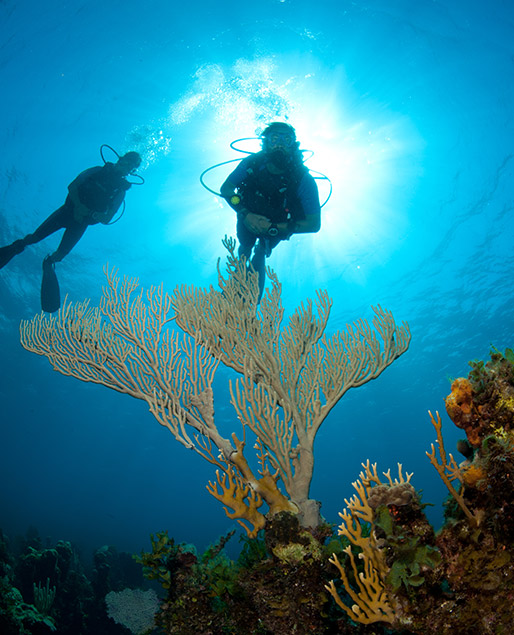
Andros Diving offers exclusive all-inclusive diving packages through the Andros Beach Club. Experience the most private and pristine diving adventures in the Caribbean on South Andros Island — the Nature Island of the Bahamas.

Discover the Wreck of South Andros

Explore a stunning 200′ coral-encrusted steel wreck located in just 60 feet of water. Join Andros Diving for an unforgettable underwater journey!

Andros Island Diving

Our Andros dive resort is the best place to explore the Andros Barrier Reef – 3rd largest in the world and 2nd largest in the Caribbean. The Andros Reef stretches 100 miles along the eastern shore of Andros Island, offering the best diving in the Bahamas. Come explore coral towers reaching 35 feet high and extensive swim-throughs packed with stunning marine life. Discover sea turtles, rays, sharks, tropical fish and much more – this beautiful underwater world awaits you!

take a vacation

Dive The Bahamas Blue Holes

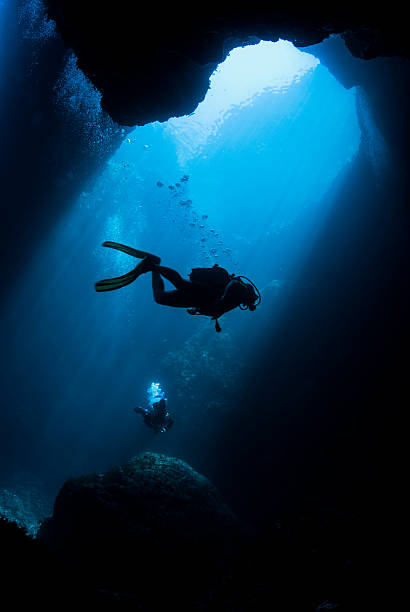
Tidal freshwater blue holes are unique to the Bahamas and South Andros Island offers the highest concentration of Blue Holes in the world. Inland and offshore blue holes can exceed 400’ of depth. Blue Holes were formed during the last ice age when ocean levels were 300-400’ lower. Rainwater and eventually seawater eroded the limestone foundation of the island and created these spectacular caverns in a variety of shapes and sizes.

A recent National Geographic cover story featured the Bahamas Blue Holes including Stargate Blue Hole of South Andros Island.

Dive Trips & Dive Certification Rates

$130 – Snorkeling
$220 – 2 Tank Boat Dives
$245 – 2 Tank Reef Rescue Experience
$190 – Inland Blue Hole Dive
$270 – Discover Scuba Lesson & 2 Dives
$750 – Scuba Diver Certification (4 dives included)
$900 – Advanced Scuba Diver Course (6 dives included)

Rates are per guest. Tanks, weights & snorkel gear included.

$40/day – BCD & Regulator. $10/day Wetsuit. $10/day Computer.

4 guest minimum required for non-Beach Club guests and surcharges may apply.

Excursions to Exuma Cays

We also offer trips to Pig Beach in Exuma to see the famous swimming pigs, Andros West Side National Park, Green Cay National Preserve, Thunderball Grotto, Staniel Cay, Grassy Cays, Shark Hole and more!

Child Care Services are Available
If you have young ones who don’t dive we can arrange safe, reliable and fun child care while you go diving. Porter (13) and Mason (11) love meeting new kids and have plenty of toys available to share.  We’re also developing our “kids camp” for larger groups to provide safe and fun entertainment onsite and nearby the resort.